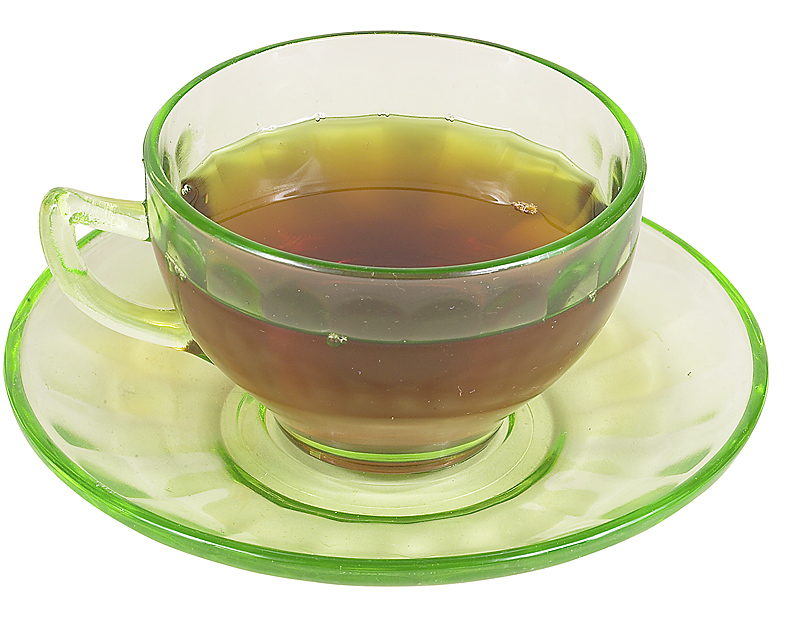
Studies have been accumulating to show that drinking a few cups of hibiscus tea daily can significantly lower elevated blood pressure in people with pre- and mild hypertension. In a paper that appeared in the Journal of Nutrition in February 2010, Tufts University researchers reported an average drop of over 7 mm HG for hibiscus versus only 1.3 mm Hg for placebo in these types of hypertensive people. The effect was stronger for systolic than for diastolic blood pressure. This is a potentially mild and helpful adjunct for treatment of this common and dangerous condition. Talk with your doctor, monitor your blood pressure, and see if this is right for you.
It is always important to do your homework about any provider to whom you entrust your health and well-being and consider the different treatment options that are available with regard to holistic healing.
Mind-Body Treatment Options
You can support these first two components of your care by adding whatever form(s) of mind-body approaches appeal to you (e.g., journaling, affirmations, guided imagery, hypnosis, biofeedback). These approaches are often very helpful to support your healing intention by reprogramming your subconscious mind, especially for people who find it easy to generate imagery and/or who are verbal, depending on the method chosen.
Some research suggests that there are individual differences in personality types in terms of who benefits from specific types of mind-body interventions. For example, absorption is a genetically-determined trait involving openness to new experiences, high intrinsic spirituality, high hypnotizability, and the capacity to lose oneself in an inner or outer experience (e.g., a sunset or a book or movie).
In people with chronic vascular headaches such as migraine, those who scored high on a questionnaire for absorption responded better to guided imagery than to biofeedback. In contrast, their peers who scored low on the same absorption scale responded better to biofeedback than to the imagery.
These observations suggest that we may someday be able to steer people with more certainty to the specific types of a treatment option that have the best chance of helping them as individuals. Genes determine personality traits, which means that personality reflects real biological differences in the brain and body from one person to another. For now, it appears likely that people with high or low trait absorption may need different types of treatments to maximize their recovery from chronic disease.
Structural/Manual Manipulation Treatment Level of Options
Especially if you have any musculoskeletal problems, the manual manipulation methods make great sense as well at this point. Whole systems of care such as osteopathy have a philosophical approach to the person that inherently views the body as comprised of interconnected, interrelated pathways. Getting the physical body into alignment by a manual manipulation method of treatment is permissive for healing throughout the system overall. Subtle energy flows better; physical discomforts resolve.
Constitutional and energetic treatments are particularly complementary with manual manipulation treatments and vice versa – that is, positioning the physical body pathways properly enables constitutional/energy treatments to move past physical blocks and exert their best effects, whereas constitutional/energy treatments can help the physical body hold the healthier positioning of soft tissue and bones from manual manipulation treatments longer.
Preventive and Biochemical Levels of Options
Finally, make sure that you are doing at least the fundamentals of supporting your physical body through the preventive level of options — regular exercise, health-promoting diet, and nutritional supplements as appropriate to your age and condition. A good multivitamin/mineral supplement, for example, is a basic for most people. Evidence suggests that such supplements are especially important for people with various chronic diseases to reduce their susceptibility to acute infections and to later life complications.
So, now that you see the big picture, have chosen your preferred approaches to a personalized holistic health care plan, and understand how to evaluate your progress, what are your next specific steps?
Here is a brief To Do list to get you on your journey of healing. These are only suggestions – again, tailoring the program to your needs is also important. Health psychologists also know that doctors and patients can get paralyzed and take no action when faced with multiple choices. To sidestep decision paralysis, focus on the step-by-step process.
First Steps Action Plan:
1. Write out and review your current choices for treatment options. If you are not sure what to pick, educate yourself as a consumer with one of the resource books, audios, and DVDs listed at the back of this book.
2. Set your healing intention. Put it into words that you write down in a journal, as a screensaver or other reminder on your computer screen, and as an affirmation that you repeat silently or aloud to yourself daily just before you go to sleep.
3. Get more information on the constitutional level of care that you chose – both the therapy itself and the local, regional, and/or national practitioners who offer what you want. Possible ways to find a good practitioner include:
o Use word of mouth from family, friends, staff at other health care professionals’ offices
o Look for small area newspapers or newsletters on holistic or alternative medicine with stories and ads about various providers
o Go on-line with web-browsing to search for official organization websites that list certified and/or licensed practitioners of a specific form of CAM. The Resources list at the back of this book gives you a start on some of the website URLs for these organizations.
4. Meet with your primary care provider and discuss your plans. Explain that you appreciate them and their treatment options, but you are thoughtfully exploring additional options. You want to work with them, openly, to find helpful answers to your health problems.
Many practitioners have ways to accommodate people who travel for their care. If you look for a practitioner who does “acupuncture,” as an example, but you accept whoever is easiest to access — or even cheapest — you may not end up receiving the type of acupuncture best suited to your health care needs.
Make sure to check carefully the credentials, training background, treatment philosophy, and current approaches to practice of each provider you consult. For basics such as professional misconduct, licensing boards in each state can provide information as to whether or not previous clients have lodged malpractice or ethical complaints against a given practitioner.
Research suggests that many users of alternative medicine in Western countries are financially able to afford paying out-of-pocket for the products and services they need for their health care. Increasingly, health care insurers are paying for a small number of alternative medicine services, e.g., for a fixed numbers of visits.
Health care options include a what (name or class of therapy), a how (particular school or style of the therapy), and a who (particular provider). All health care occurs in a context — the larger context of your life. Although you may see your health as separate from your life context, it is not. Health and disease are very much interwoven into the fabric of your life.
That is why you hear about people who undergo miraculous cures of their diseases talking about changes in themselves that go far beyond the resolution of a health problem. Your health care is simply a local focus for you to get the help to get out on your road to healing.
The Who of Your Healing Programhttp://irisbell.com/wp-admin/post-new.php
Your program will most likely involve you and professional providers in selecting and implementing various tools for healing. The Who is variable. You will always be the person making the decisions as to whom to involve in your care. Some of the way, however, you may also learn about a valuable self-care tool from a provider or a book or website or a friend or family member.
Some of the tools will involve self-care, not a professional provider. You may identify a form of a tool that is helpful for you to incorporate into your program. You do not necessarily need a provider for every aspect of your health care.
In chronic disease, research shows that one of the most important aspects of improving your sense of self-efficacy and your outcome is learning how to manage day to day aspects of living well and coping with disease-related challenges for yourself. Expecting a professional to be there all the time is not only unrealistic; it misses the point of growing through facing challenges on your own.
To the extent that a health care option depends on a particular provider’s judgment of what is wrong and what treatment is needed, things may go better or worse. In the ideal, each provider is equally qualified in terms of technical training and preparation to help you to the maximum possible and in personal qualities with which you resonate. In the real world, providers are people with their own technical and personal strengths and weaknesses.
In the real world, you may or may not develop a good relationship and communication channel with a particular provider. A provider may have what appear to be good tools technically, but difficult to work with in the therapeutic relationship. Another provider may be very caring and compassionate but still not have the perspective, knowledge, or tools that will help you the most.
If you happen to find both the relationship and the tools in the same provider, rejoice and partner with them in your healing process. However, some providers, even the most talented, may also be so bound up in ego issues about needing to help you and taking credit for your recovery that they have their own unresolved issues that are not yours to take on.
For your healing, seek selfless compassionate healers who have only your highest and best good as their intention, not another notch on their therapeutic gun. Flee from providers who tell you that you must forsake all other care for them and their approach, as they have the only right and true answer for you. In some way, they are more of a cult leader than a true healer.
For an optimal healing environment, you will want your healers to relate to you in a way that makes you feel heard and understood. Although you may find that the turning point for your healing occurs under care with a particular person, you may also find that you need several different providers with different tools at the same time or over time.
In order to put together your personal treatment program in a way that will move you closer to inner readiness to heal and position, you to have an extraordinary healing response to the package of care you assemble. Your healing response depends upon what is in your dynamics and how stuck you are when dealing with a chronic disease.
The Disease Stuckness Quiz – What’s in Your Dynamics?
On a scale of 1 to 5, with 1 = not true for me, and 5 = very true for me, rate yourself for each item below. Add up your scores when you are done.
1. I have had a chronic disease from early in life (before my mid-life years). ____
2. My biological parents and grandparents were sick with serious diseases much of their lives. ____
3. I am the kind of person who stays in an intimate relationship or a close friendship with someone even when it no longer nurtures me. ____
4. I find myself in repetitive patterns in at least one area of my life that seem to end badly for me again and again. ____
5. The kind of chronic disease(s) that I have developed affects my brain or nervous system, or another major organ. ____
6. I rarely catch colds or flu. ____
7. I must take at least one prescription drug regularly. ____
8. I feel that my life is in a rut. ____
9. It is hard for me to bounce back from setbacks or big changes in my life. ____
10. I have to stay in my current job for the money, the benefits, and/or the security.____
11. I need to do certain things as much as I can or I do not feel well (e.g., exercise, control my eating, swallow my anger – or vent my anger, get out – or stay home – more). ____
12. I should work harder – or, its opposite – I should take it easier. ____
TOTAL DISEASE STUCKNESS SCORE ____
The maximum score is 60. A score above 36 suggests significant amounts of stuckness. The higher your score, the more stuck you are likely to be in your chronic disease – and your life, of which the mental, emotional, or physical disease is one major manifestation.
Feeling a need or having to do – or not do – something most of the time limits your freedom. A lower disease stuckness score suggests that the right individualized treatments will move you along more readily and perhaps faster than someone with a higher score.
Do not despair, however – you can usually get unstuck no matter how high your score, unless you are in your final moments of this life. A higher score simply means that it may take more time and persistence from you to get free and stay free of your disease rut. And even when cure is not possible, people can and do heal, especially in their final moments of life.
Use your Disease Stuckness Quiz score as a general guide: (a) to help you set up the extent of your treatment program. The higher your score, the more likely it is that you will need a full program at multiple levels of the system to get yourself unstuck and sustain you in making lasting changes to heal. With a lower score, a simpler program with one modality may be sufficient; (b) to prepare you for how long it might take to see significant change.
The higher your score, the more likely it is that you will want to give each treatment option and yourself a longer period of time to heal, e.g., perhaps on the order of a year or more. With a lower score, the simpler program may produce good results in only a few months.