Patient-Centered Care vs. Disease-Centered Care
In health care, our usual focus is the person level of organization. In conventional medicine, there is a perspective called “patient-centered care.” Patient-centered care, which concerns itself with the issues of who-has-the-disease, is distinguished from disease-centered care, which concerns itself with the issues of what-is-the-disease. In other words, the person is more important than his/her disease label.
Disease-centered thinking in conventional medicine revolves around the cellular and molecular level of scale. However, research has shown that many of us prefer to have a relationship with a provider who gives us patient-centered care in the sense that we are informed about our disease(s) and all of our treatment options and participate in decisions about how to proceed (rather than being told what to do).
Organizational Levels of Scale
You are a system unto yourself, but you are made up of other systems at lower levels of organizational scale (e.g., circulatory system, immune system); and you are a part of still other systems at higher levels of organizational scale (e.g., families, communities, living creatures on earth).
§ Higher Level of Organization: For a complex living system, each next higher level of organization has emergent properties, that is, behaviors that the higher level can generate, but that its component parts at a lower level cannot (a person has” behaviors” that a liver or heart by itself does not).
At the same time, there is a bidirectional feedback loop of information, from the global to the local level and back the other way. It is the feedback that allows the global (person level) and local (body parts level) to influence each other’s function, that is, to define your unique “you-ness.”
Levels of Scale from a Systems Perspective
Another way of understanding the holographic qualities of health and healing is to look at levels of scale from a systems perspective – true holism. Many systems, especially living systems, have a self-similarity or theme (also called “fractality”), at every level of scale. The self-similarity is a geometric concept, in which an object is irregular but similarly irregular at every degree of magnification, i.e., close up and far away.
In conventional anatomy, the self-similarity occurs in body parts such as different levels of organization of the bronchial tree. In complementary therapies, the self-similarity is not in physical structure so much as it is in patterns of function or dynamics (change). People can be in self-similar ruts of disease, just as they can be in ruts with relationships or jobs. The same idea is true for processes and functions – such as you, your body, and your health in your life.
Thus, under environmental stress (psychological or physical in nature), a person prone to asthma may experience an asthma attack. Their “rut” is responding with anxiety and asthma under certain environmental challenges. A different person might respond to the same environmental factors with irritability and a migraine attack.
You are literally “doing your own [unique] thing” in your world. And, in chronic illness, you are doing your own unhealthy thing over and over. The names and faces (specific content or details) may change from event to event, but the storyline repeats the same process through time.
The new ABC perspective of holistic healing is that you must realize that you are more than the sum of your body parts.
Is Your Life a Car or a Hologram?
The trouble is that people with chronic disease have usually accepted the world view of conventional medicine that the body is made of parts that are assembled into some sort of mechanical being. Parts can be removed with surgery or forced to work better with a drug if they malfunction. To conventional or mainstream medicine, the body is a car whose parts are either unnecessary (appendix, tonsils, gallbladders) or replaceable (hearts, livers, kidneys). In many emergencies and acute illnesses, the mainstream perspective and treatments can be life-saving. In chronic disease such as fibromyalgia, diabetes, thyroid, ms (multiple sclerosis), lyme disease, and lupus, it can lead to problems.
§ In one sense, a person is more like a hologram than a car. The whole is greater than the sum of the parts, and what each part does at the seemingly local level reflects the condition of the whole person at the global level. A hologram is a three-dimensional image produced by a coherent laser light.
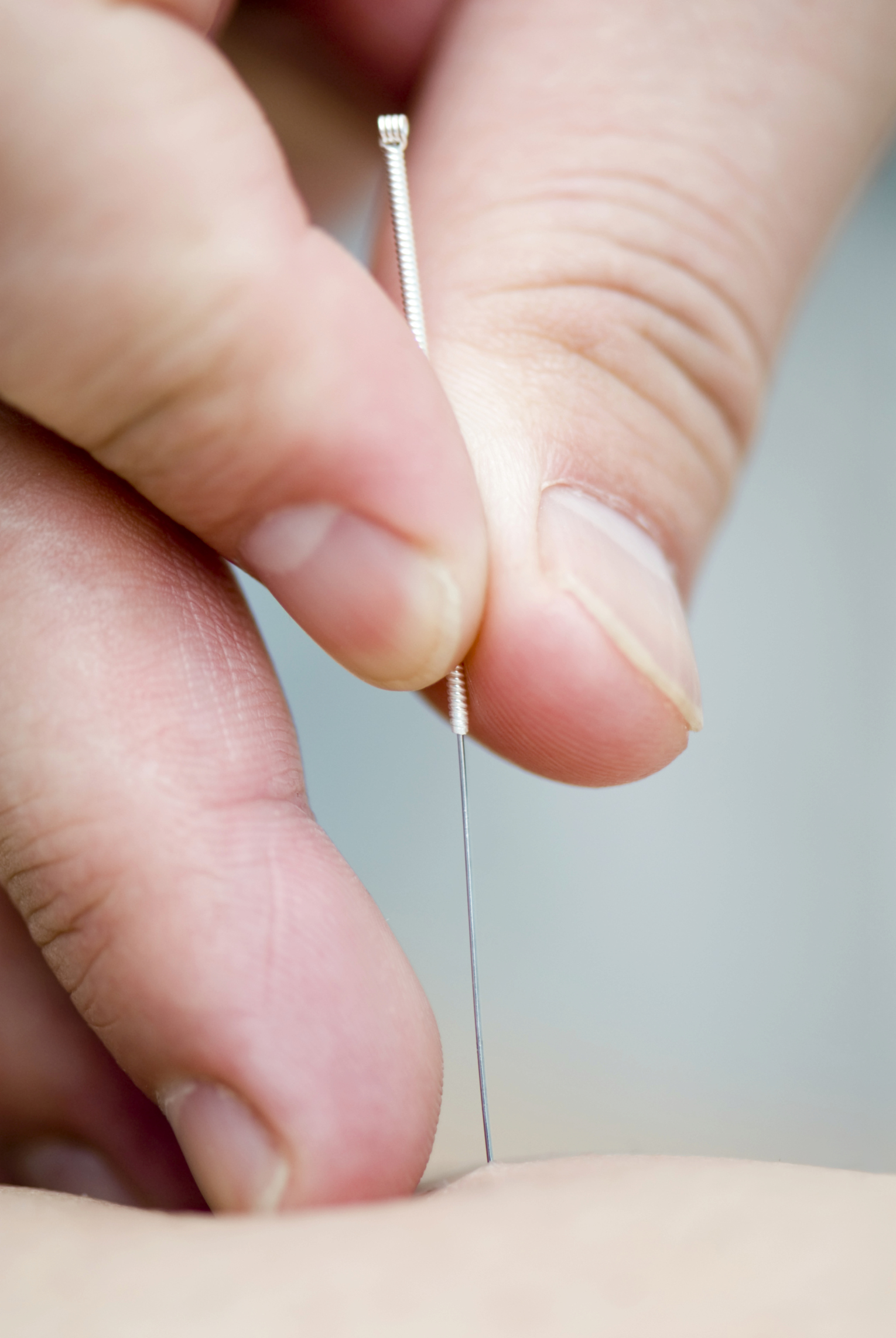
The key feature of a hologram is that any part of a holographic film contains the whole image. Many systems of CAM, including acupuncture and homeopathy, explicitly recognize this holographic reality of the person and use it in their approach to diagnosis and treatment. CAM systems use the local symptoms as a clue to the overall (global) disturbance in the person.
The symptom is a complete, self-contained small picture (microcosm) of the complete big picture (macrocosm) that is the person’s disease. CAM (complimentary and alternative medicine) treatment ultimately targets the big picture (global) as it reveals itself in the small picture (local) disturbance.
Conventional Medicine vs. Complimentary and Alternative Medicine (CAM)
Conventional medicine looks at molecules, which are the local level, and stays at the local level to treat the molecular behaviors. The best drugs in conventional medicine target specific cells and molecules, even subtypes of cells and molecules and their receptors in the body at the local level of scale. In contrast, CAM systems use the behaviors of the molecules in order to see the big picture behaviors of the whole system of which the molecules are a part.
Thus, mainstream medicine and systems of CAM approach diagnosis and treatment very differently. As a consumer of health care, you may not realize that you usually apply the much more familiar automobile, local world view of your body when you seek treatment.
You tend to often use the automobile world view even when you try CAM. You want something to fix the problem you experience in a body part. You usually don’t consider that the body part is simply doing its best to tell you that you are sick. Sickness in a body part is a biofeedback message back to you that you are out of balance, out of alignment with your Self and your environment.
Your body has wisdom – it knows that it isn’t a car. It knows that it is a hologram. Do you? If you have a symptom – a rash on your skin or a headache or a pain in a joint or diarrhea, you are sick, not your skin or head or joint or gut. It just happens that the only way your skin can manifest your sickness at its own local level is by way of a rash or a pimple.
In short, symptoms are a wake-up call from yourself to Your Self. This is true holistic healing in action. If you can look at your symptoms and diseases in a holographic way, you can come up with remarkable insights and plan your treatment better. Otherwise, every option seems just as good – or bad – as every other option – and there are a bewildering number of options out there from which to choose.
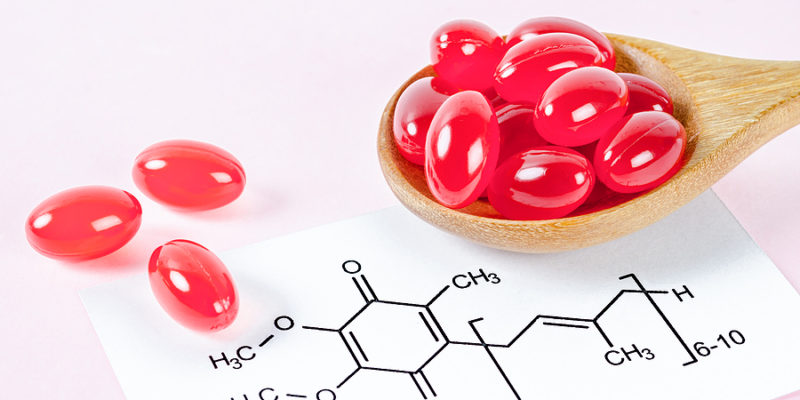
While I know the value of using drugs to save lives, I am nonetheless amazed at the mindset we have in health care that we head for a drug or vaccine every time a chronic disease problem arises. In the case of osteoporosis, there needs to be some common sense. If you look at the literature even a little, you will see that women probably reduce their risk of bone fractures (which is really what matters – though many studies focus just on bone density) by taking enough vitamin D (especially D3), vitamin K2 (perhaps especially MK-7 form), and strontium supplements.
Are these perfect? Are they free of risks? No to both questions. But, so far, it appears that the risks from these nutritional supplements are considerably lower than from the typical bone density-focused drugs like the bisphosphonates (common drugs for reducing loss of bone mass). Why are we not hearing more about the vitamins here, especially when it makes sense that the source of a health problem could come from how we live more than from a lack of bisphosphonates in our bodies…
Another clue – do we start hearing that a vitamin we associate with one particular benefit turns up with another benefit (hint: unlike drugs, nutrients like vitamins have multiple “intended” roles in the body). So, lately we hear about vitamin D reducing flu risk and perhaps cardiovascular risk. Vitamin K is now emerging in epidemiological studies as a possible way to lower cardiovascular risk as well ( Nutr Metab Cardiovasc Dis. 2009 Sep;19(7):504-10).
Holistic medicine isn’t for the crowd, the masses, “everyone.” Holistic medicine is for individuals, one person at a time.
Are you confused by the news on natural products and research on alternative therapies like acupuncture, homeopathy, meditation, herbs, and vitamins? We are here to give you updates and commentary to cut through the confusion and find the right answers for you.
Holistic medicine should always be individualized. And you need a road map, not a haphazard set of things to try…
Here we’ll tell you about emerging ideas and research findings on holistic medicine, integrative medicine, and alternative therapies overall. Then we’ll try to explain how it all fits together into the whole big picture. From there, it is up to you, the informed consumer, to make the choices that make sense for your unique situation.